Showing posts with label video games. Show all posts

Wednesday, January 18, 2012

If the Play's the Thing...

My friend Roger Whitson pinged me early on Twitter yesterday and directed me to a post by Mark Sample on Play the Past: What Comes before the Platform: The Refuse of Video Games. It's a good article and makes some very salient points about a side of gaming that people don't want to talk about, what Sample sums up as "Pre-Platform Studies:" what goes into making the things that play the games we play?

Specifically Sample's talking about the long lines of supply that go into producing the raw materials that are fed into the factories that are made by workers into things they will never personally be able to afford. It's a tale of slavery, coercion, warlords, organized crime, exploitation, and Western consumer ignorance. Go read it - it's a good post and hits the points better than I could myself.
If you don't feel some measure of guilt over this, you should.

Something bothered me after reading Sample's post though, and (like any good netizen) I turned to Twitter to discuss it with @rogerwhitson. Why did Sample pick on video games specifically? Why is it so important to video game studies that we include the amount exploitation that pervades the supply chain? Does it actually matter to the study of the game itself? Shouldn't we then study the deforestation and supply process that goes into the creation of books (I asked Roger)?

Our discussion went off on a tangent about the importance of the influence of capitalism (Rog's label, not mine, although he later admitted it was shorthand for what I referred to as a technologically advanced society. After all, the Soviets weren't exactly known for their Earth-friendly or nonexploitive labor practices, and they built video arcades too.) Sidenote to readers: don't use "capitalism" as a synonym or shorthand for "technologically advanced society." It's wrong on several levels.

That's more like it.

What we came back to in our conversation was that Sample's point was most definitely important: people don't really know about the awful things that go into making the things upon which we play our games, and that should be part of the conversation. But at what level?

Let's start with a few statements and assumptions.

1. Is platform important to video game studies? Yes, absolutely. "Platform" covers the hardware you use to play the game, which includes graphic and sound capabilities and input: two important overall aspects of the gaming experience. It also includes lesser-important things like media (although load times do affect the game experience) and multiplayer capabilities and experiences. So yes, it's important.

2. Is platform important to other studies? Well... sort of. Is a book on Kindle fundamentally different from a book on paper, to the point where it would change the overall experience? If so, the difference is more of an Xbox 360 vs. PS3 instead of an Xbox 360 vs. Atari 2600 argument: in other words, relatively insignifiant.

But what about, say, music? Listening to a recording done on a home casette recorder is significantly different from listening to a recording done with professional recording equipment. So too is listening to both recordings on a tinny mono speaker instead of a high-end audiophile system. The experience changes both ways, therefore the platform does influence the study.

Movies are the same way. A film shot on an 8mm handheld is vastly different from a film recorded with DV and postprocessed on massive server farms to add CGI to every frame. Watching them is a different experience on a small black and white TV than on a 9-story IMAX screen.
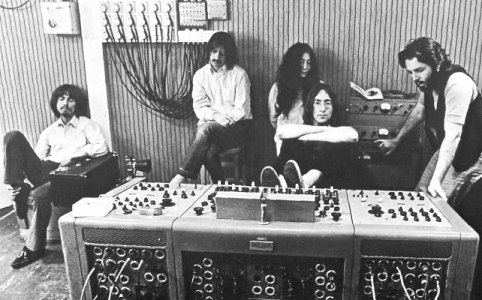
John, stop the car, Ringo's got out again.

I realize I'm talking in degrees here, but if anything I'm searching for larger context in the overall conversation to answer my previous question. I left the conversation with Roger yesterday and took the dog for a walk (a sure way to clear my head if ever there was one), and came back and Tweeted that the thing that bothered me about Sample's article was that he didn't offer solutions. Actually, I was wrong. He did offer solutions: the importance of including the Pre-Platform studies in video game studies.

Creeping a bit (because that's how I roll) I saw an earlier conversation Sample had with one of his followers about the book question, and both of them mentioned books that are (I'm paraphrasing) ethically created - not printed in countries where they would deforest land for pulp, or mistreat workers in the paper mills.

That's where I left things last night.

This morning I realized perhaps the best comparison to what Sample was proposing wasn't from another art form at all, but instead from the food industry.

Pre-Platform Food? How about ethically sourced, local, and/or organic food? Chances are, thanks in no small part to the rise of the online foodie movement and the ease of access to films like Super Size Me or Food, Inc., you're at least aware of these options as being healthier for you as well as better for local producers and the environment. You're probably not calculating the carbon footprint of every meal you consume (although if you are, bully for you!), but there is a much higher level of awareness around these things at the consumer level.

Waggle Wiimote to pick locally-sourced food.

But this isn't just a movement at the consumer level: chefs prefer these sorts of ingredients when they're creating food. Case in point: local Seattle chef Becky Selengut's book Good Fish, which is as much about seafood preparation as it is about the ethics around the seafood supply chain: an issue around which there are as many moral problems for Western societies as the consumer electronics supply chain.

And that is the crux of my reply to Mark Sample: Pre-Platform Studies should be part of conversations around not just video games, but any artform that ties so closely into supply chains. Where DOES that paper come from that your novel is printed on? Aren't there just as many third-world miners, raw materials, factories, and exploited workers in the sound system I'm listening to, the Kindle I'm reading on, the television I'm watching, the cameras and computers that went into producing Avatar as there are in games?

To rephrase as a statement rather than a question: this isn't just about video games, and it's frankly a larger conversation that just video game studies. It is (marketing hat on) a consumer awareness and perception issue that goes way beyond video games. As a technologically advanced society we become increasingly reliant on things from which we are further and further divorced, whether it's our phones, TVs, Xboxes, cars, food, or even the houses we live in or the places we work and play. I'll admit, as savvy as I'd like to think I am about such things, I have no clue about how most of the stuff I use is made. Even the table I'm typing this on was made in India, and I can only imagine the state of the furniture factory that created it or the processes that went into harvesting the trees - and my imagination is not good.

I don't want to think about the exploitation it took to create these pixels.
This is what I was looking for in Sample's blog post, because it is a broad and extremely important consumer issue in an increasingly global society. It's not like we can all whip out our local Shaker-made iPhones and connect to the Organic Locally Sourced Cellphone Network. At least, not yet. It is good to have goals after all.

So the conversation Sample's proposing seems to me less of one central to video game studies, and more of one central to overall consumer awareness and the impact of a technologically advanced society such as ours. There are indeed a lot of conversations to be had about exploitation at all levels of the games industry, from the aforementioned supply lines to the more First World Problems around game companies overworking staff members around launch and then firing them shortly thereafter.

Video game screenshot of the awful working conditions at a fictional video game company. Meta as fuck.

But whether this is integral to the study of the game itself is another story. I'm coming down on the side of "not really," for the same reason that the context of the paper the first edition Moby Dick was printed on isn't integral to the study of Moby Dick, or the way that the oil that powers a sports car isn't important to the performance of the car itself on a test course. Which takes away nothing from the broader point that this is a very important issue. It just strikes me as a consumer ignorance and awareness issue rather than a critical one.


Friday, May 28, 2010

Artificial Intelligence

A higher difficulty level in a strategy game should mean that I'm playing against a smarter opponent who makes strategically sound moves.

It should not mean that the rules of the game alter to favor my opponent, who is still playing as dumb as he was on the easy setting, but now with fuzzy math that means things end up in his favor more often than not.

How is this so hard to program?

Wednesday, May 05, 2010

A Question of Character (and System)

I'm getting back in the groove of running a regular role-playing game, and I chose a very different genre for me: a sci-fi game set in the universe of Richard K Morgan's Altered Carbon books. I also decided to give a new system a spin: Eclipse Phase. I've had a really good experience with the Eclipse Phase team (they helped me out when I really needed it - seriously, excellent customer service), but it doesn't look like the system is going to work with our group's style. More importantly, with my GMing style.

I thought about this after reading a list of story-driven RPGs on The Mighty Atom, many of which I've at least read if not tried. My GMing style tends to be very story focused. I see the game as a chance for a group of friends to sit down together and tell a collective story, and the game system has to be an enabler for this. The system is designed to give the game some structure and resolve conflicts that arise in the story in a reasonable way (characters fighting other characters being a common conflict.)

Eclipse Phase turned out to be slightly too clunky for my tastes. It's not a bad system at all. It's a very good system, but it focuses a little more on simulation over story. This fits some people's playstyles perfectly but not mine. One of the reasons I was happy with the d20 system was that I knew it very well, including its limitations, and it did a fair job of simulating a character's abilities without getting in the way. The system was easy to push aside when you simply wanted to focus on story.

I've been thinking a lot about this in relation to other game styles that I enjoy. I agree about 99.99% with Shamus Young's comparison of Saint's Row 2 vs. Grand Theft Auto IV that he published on Twenty Sided. The money quote for me:

    In GTA IV, the mission designer has all the fun, designing something for you to enact. In Saints Row 2, the designer just fills the world with toys and you get to do the creative part.

This carries over into the characterization as well. In Saint's Row 2, you design your character from the ground up. He (or she) has no name. His history is painted with broad stokes, allowing you to fill in. In GTA4, your character is so specific that I'm certain there's a 100-page biography sitting on some brand manager's desk somewhere in Rockstar headquarters. It's fine for a movie. It's awful for a game.

RPGs, especially online RPGs, have had a hard time walking this line. Early RPGs like Bard's Tale or Wasteland had no 'stock' characters. You rolled your own, decided your class, named them, and they simply interacted with the world. This is the same model that most offline RPGs use, except all of the hard math stuffs are automated. The funny thing is, most of these early RPGs were very light on the story (if it existed at all.)

Eventually this changed, notably with games like Baldur's Gate or Planescape: Torment. The character was still largely up to the player but he or she had a defined background and history. You were no longer playing a character that was your own. Japanese RPGs are even worse in this regard, essentially plopping you in the role of an anime character where the only customization they allowed was swapping of gear or possibly changing the name. Which is fine if you want an interactive film, but not so great if part of the joy of playing the game is imagining yourself in the role.

RPGs have since swung back towards the Baldur's Gate or Torment models. In Fallout 3 players can define their character and even play through and define some of his or her background (within a set of parameters) and are then presented with a series of puzzles, missions and quests that they can solve pretty much any way they wish.

This is the design ethic I like to use in the games I run. I admit that it's been a long personal road getting to this point (what do you MEAN you're not going to do what I thought?!? There's four hours of planning down the toilet!!) This may not be a universal rule, but I'd be willing to bet that the system one chooses will match one's playstyle and storytelling style as well.

Does it matter in Just Cause 2 whether my character, a CIA operative with unlimited parachutes and a grapple wire-thing attached to his arm, is skilled in an AK-47 assault rife, an M16 assault rife, or a pistol? No. He can pick up any of these guns (in fact, assault rifles are just 'assault rifles' in the game) and blaze away at his enemies because it's more fun than him picking up one of several kinds of guns, looking at it stupidly and saying 'well, can't shoot this! without a -20 penalty! before dying in a hailstorm of enemy lead. Why? Because that's lame. It isn't any fun for the player.

Just Cause 2, much like Saint's Row 2, presents you with a bunch of options and lets you do things and solve things pretty much any way you want - it knows when to get the hell out of the way in favor of a fun time and progressing the game along. That's the kind of system I need in the games I'm running.

I'm not trashing Eclipse Phase - I have nothing but respect for the designers and the team. With a different group (and someone else as GM) I would absolutely love it.

The kind of game I want to run will hopefully be as fully defined by my players' imaginations as my own. Here's some stuff, you guys come up with a way to overcome it, hey that sounds reasonable, this is how it all plays out. It's the foundation for all RPGs but games of all genres too often get hung up on the fiddly parts and forget the fun parts.

Wednesday, February 24, 2010

New Horizons

I've been fairly tight-lipped about this but for good reason. The 11th was my last day at Edelman, as I accepted a new position with a gaming company. Today we announced ourselves to the world, so I can say that I work for En Masse Entertainment, an MMO publisher, on their first title TERA.

I'm the Community Director here an En Masse, and we're putting a huge focus on community before, during and after the game's launch. It's an amazing opportunity for me not only because I'm back in the games industry and working with an awesome group of people, but it's possibly one of the best moves I can make for my professional development. We're going to do some kickass community work and I won't just be a part of it, I'll be leading it!

BrotherMagneto is back in the old community saddle!

Saturday, May 02, 2009

A Game That Matters

One of the members of the Alliterates pointed me towards this great editorial on The Escapist: How A Board Game Can Make You Cry. It's a really great look at what Brenda Brathwaite has been doing recently in terms of designing games that make you think - starting with a game about the Middle Passage she made to illustrate how horrific the slave trade was, so that her ten-year-old daughter could make an emotional (and logical) connection to the facts taught in her school.

The article then cites a game called Train:

    The object of Train is to get a collection of people from Point A to Point B by placing them in a boxcar and sending them on their merry way. Played among a group of three people, players draw cards from a pile that can impede other players or free them from existing obstacles. The first player to reach the end of the line wins.

    The destination? Auschwitz.

    The "game" didn't stop there, however. The game board ... is an allusion to Kristallnacht - Brathwaite explained that she needed to break a fresh piece of glass each time she "installed" her work in a new location to properly evoke the violence of the experience. She even typed the game's instructions on an actual SS typewriter, which she purchased solely for that purpose.
Nazis have featured prominently in games for a long time, typically as the enemy, whether it was Wolfenstein's chaingun-wielding Hitler or the recent flood of World War II shooters on the market. Nazis are kind of like zombies in that they've become sort of an abstract enemy, relentlessly evil and fodder for headshots.

Very few, if any, games featuring Nazis ever touch on the Holocaust, and if they do it's usually some muscle-bound mook with guns liberating a death camp where you don't actually see the victims.

What makes Train - and, I would argue, any game whose mechanics make the audience think (Braid, I'm looking at you) - so interesting is that the connection it creates to its subject matter is both rawly emotional and rationally engaging. In the example about the African slave trade, a game mechanic involves the players arranging groups of slaves by tribe and family, and then picking up slaves by the fistful, so that the full impact of separation is both observed and felt. All that hard work - to work of building a life and a family - is laid to waste, and then the true 'game' begins.

There is an argument about whether games can be art. Things like Train and designers like Brenda Brathwaite prove beyond a doubt they can.

Wednesday, December 03, 2008

Fallout 3

I've been following the release of Fallout 3 for more than a year now. The game is out, I've played it all the way through once, and I might as well throw my opinion into the Internet's sludge pool about the game, since everyone else already has.

If you haven't finished the game, or don't want (minor) spoilers, you might want to read something else.

I kept my expectations for Fallout 3 firmly in check, not because I didn't enjoy Oblivion (I did, repetitive as it could be sometimes) but because of my history with Fallout and Wasteland, and - yes - the heritage of the series. If my expectations were low, then I couldn't be disappointed. I had my doubts about a lot of things about the game, but at the end of it I walked away feeling satisfied, and like I had a lot of fun. What more can you ask for?

Fallout 3 is shorter than Oblivion but somehow more engaging; the world seemed a little smaller as well, which helped everything have a more immediate feel to it. You quite literally start the game as your character comes out of the womb and in a pretty innovative starting sequence, you choose your gender, race and stats as your character grows up. You finish off your character by making choices in a standardized test, or you can simply do the gamer thing and assign yourself some skills and start rocking.

The main quest involves you searching for your dad, and I suspect you can tear through it pretty quickly if you ignore all the other stuff going on around you. But why would you want to do that? While the world may be small it is very lush (as lush as a post-nuclear wasteland can be, anyway) and it seems like there is always something new and unique to do and discover. There's also a hell of a lot of latitude as you go through the world to approach things on your own terms, and I suspect I only scratched the surface of the depth of some of the puzzles and areas in the game.

The final mission is really awesome, until the end which seems almost anticlimactic. I was a little disappointed that the game forces you to stop playing at the end as well; there was a whole world out there for me to keep exploring and I wanted to see the rest of it, damn it!

The Good

  • VATS. Action-based RPGs aren't my thing. I prefer to stop, look around, assess, and make decisions in combat. Oblivion felt more like a shooter than an RPG when it came down to brass tacks. VATS was an excellent solution to this problem.
  • The depth. There was a lot to do in this game, and so much of it purely optional or fun that the world felt more fleshed out than Oblivion did. Add to that locations that had enough variety to feel fresh as well.
  • The setting. It's Fallout. And this was a Fallout game, no doubt about it.


The Bad
  • Herding. I felt herded at times, especially when I was supposed to be travelling through the city and I couldn't just walk through the streets or over piles of rubble, I had to run through some predetermined dungeon funhouses to get there. Ugh.
  • Slightly unpolished. There are some strange things - I noticed this the most during the final battle, when I had to load the game several times just to get the robot to walk the path correctly (once, he got stuck in the air and wouldn't come down. No, he doesn't fly.) Of course, comparing Fallout 3's polish to the absolutely unplayable state of Fallout 2 when it released if kind of a joke in and of itself.
  • The plot. The plot never changes. I'm going to go fanboy for a second, but my biggest pet peeve of this game was that it was a frankenplot of previous Fallout games. And evil overseer who turns you out of the vault? A quest for water? The need for a GECK? The Brotherhood as mysterious allies, the Enclave as antagonists? All straight from other Fallout games, which were set on the other coast. I wanted to see new organizations, new enemies, new problems to solve. Not the same stuff in a different setting with a different game engine.
  • Power. Last but not least, a tiny bugbear of mine. How the hell was there still juice running through the destroyed DC power grid to power vending machines and neon signs in the metro system? In my best comic shop guy voice: as if.


Fallout 3 was fun, and apart from my pretty minor complaints an excellent entry into the series. The previous games were not perfect either, and this one can join its slightly flawed brethren on my shelf any day.

War. War never changes.

Saturday, April 05, 2008

Let Us Tell Sad Stories of the Death of Consoles

Yesterday I got up early to pack my 360 and all my Rock Band kit into a suitcase to drag it down Holloway Road, ride with it through the Tube, then drag it into my office so we could do our first planned office morale activity: play some Rock Band. That's doubly-cool because Rock Band isn't out here yet, so no one has had a chance to play around with it. I set up the Xbox, plugged it in, got all the instruments plugged in, ran through a test song to make sure everything was working correctly, turned it off until the session was about to start, came back and turned it on, watched as the menu froze, then watched as the startup screen froze, and then got the symbol you see above.

The Red Ring of Death.

The Red Ring of Death, or RROD, is what happens when there's a critical failure inside a 360 - it flashes three quarter-circles of red light to indicate that it's got a bit of a problem. It also means your console isn't working anymore and you have to send it to Microsoft so they fix it - and wait, console-less, for them to do so.

Now it's no mystery that I worked on the 360 account in my first days at Edelman, initially on the Corporate team and then on the Community team, before moving on to other accounts (and, that takes care of my transparency disclosure too.) I was excited to work on the 360 account because I came from traditional games, I thought the 360 was doing a lot of things right, and I liked the original Xbox a lot. I don't want to say that I was chugging the cool-aid, but I did buy the first 360 I could as soon as I could.

That one lasted about three months before its DVD drive failed, scratching some of my discs.

The next one lasted about six months or so before its DVD failed.

The one you see above is my third Xbox 360.

Additionally, I packed it into a box to ship over here around the first of November, so until recently I had been Xbox-less. It took far longer to get here than anticipated, so it was sitting unused in its box for a good part of the last few months. Since it got here, I haven't put it through any use it hadn't been through before - often I'm very good about turning it off and not playing for too long at any given time - not that I have time to do otherwise.

Now I've had a lot of consoles. I had an NES. It did start to get wonky, because some NES' had problems with their connectors going bad. Fixing it is an easy open-screw job. I have a Genesis. It still works fine. I had a SNES. Going strong. I have a Dreamcast that works like a charm. I have purchased a 2600, an Intellivision, a Colecovision, a Sega CD and Sega 32X, a Jaguar, a Turbo Graphix 16, a Saturn, and and Xbox, all of which work as well as they did when they rolled off the assembly line. I also have a PS2, which I had to replace twice, both times for the DVD drive failing. If I had purchased a piece of consumer electronics that failed three times on me, I would simply not buy it again or replace it after the third time.

Except in this instance I have hundreds of dollars of games for this device, so I'd really be screwing myself. So I will wait, patiently, for my the repaired console to come back.

I offer no judgment on this situation - I leave that up to you, Puppeteers. I'm only neutrally reporting what's happened to me and the fact that I will now likely have to wait two more months to get my console back. I also have to request my specific console back, because it's a US 360 and 360 games are region-coded - meaning if I just went out and got a UK 360, none of my games would work on it. And since I have to send it to the UK repair center (centre), I run the risk of them not returning my console to me at all but instead giving me one that won't work with my games.

In the meantime, as much as I'd love to play Rock Band or Crackdown with my friends back home - sorry guys, I'm going to have to sit the next few rounds out. I suppose you could send game requests to the repair center (centre) - I hear they have a lot of consoles there.

Wednesday, March 12, 2008

Allow Myself To, Uh, Play With Myself

So one of the things I've been doing in my free time lately is playing through old Sierra games - specifically, Quest for Glory games. I got the idea to try a 'Let's Play' for these games on the good old SA forums. I realized after investing quite a few hours into this that I should probably make a more permanent record than SA for these things - so I started another blog. Classic Let's Play. For playing classic games.

If you're so inclined, check it out. It's not up to date with the actual LP thread yet, but I'll keep updating it when I have a free second here and there.

Also if you don't know what the hell I'm talking about as far as Let's Play goes - it's a subculture of gamers and people who watch other people play video games and attempt to make humorous comments along the way. Yes, it's geeky. It's really geeky. But at least it's not fan fiction.

Tuesday, February 19, 2008

A Lot Can Happen in Three Months


On December 1, I packed up a few boxes of my stuff in Seattle to ship it to London. It's now February 19 and I'm going to have to wait at least another week before I see my stuff, making it a good three month lapse. You can read the whole story on my other blog, thanks to the lovely company VIP Relocation, who the Beautiful Competition and I now simply refer to as "those jokes."

One of the things I packed into those boxes was my good old Xbox 360, and one of the other things was an accompanying attachment I purchased as a tax break back when I was working on Microsoft business in Seattle: the HD-DVD Player accessory. In early December Heroes had just come out on HD-DVD (exclusively), things were looking really great for the format, and I was looking forward to getting some good life out of it once I unpacked it here (should it ever arrive.)

Even on January 1, that was a distinct possibility.

Then the following happened:

Warner Bros., one of the major backers of HD-DVD, switched to Blu-Ray exclusively. Blu-ray is the competing HD optical format.

HD-DVD canceled their CES press conference. Ouch.

Paramount defected to Blu-ray shortly thereafter.

Universal hedged its bets and went with Blu-ray too.

My former client announced a fire sale on HD-DVD accessories.

Netflix dropped HD DVD from its lineup, a sad move since aside from Heroes and a copy of Hot Fuzz I never bought one, just got them from Netflix.

So did Wal-Mart. Double-ouch.

Finally, Toshiba, the HD-DVD manufacturer, gave up and pulled the plug.

And to add insult to injury, Gamestop won't give you any money for your HD-DVD stuff anymore - even the Xbox accessory.

Now there's nothing left to do but to tell sad stories of the death of kings.

It's pretty amusing that this all went down while my HD-DVD accessory was locked away on a boat somewhere. This is always the price of early adoption, and I don't think I'll ever make this mistake again. But on the other hand, I liked HD-DVD's menus far better than the Blu-rays I saw, which were basically DVDs with better resolution. The HD-DVDs were just cleaner, they looked more techie. Which may be part of the reason most people didn't like them.

On the other hand, all I'm out is an accessory that cost me $150 for which I got a tax write-off anyway and I did get some serious enjoyment out of for the short span in which I had it. Who knows, maybe it will become a collector's item someday like a Sega CD or a 32x or any other failed add-on video game accessories in the past.

I guess when it finally does get here I can just put it in my collection of old video game crap that I'll use when I have a house again, someday, maybe.

Sunday, December 30, 2007

It's The End of the Year As We Know It

I planned to do a spoof "top 10" list but it kind of fell by the wayside as I've been out and enjoying London, so instead I'll do a serious predictions for 2008 post mixed with some reflections on 2007. It's been a hell of a year; I had no idea I'd end up living in London when 2007 dawned. We took a vacation to Spain, I've sorted out some problems in my life and started tackling new ones. I haven't really lost much weight but I haven't gained any either, which I'll accept for the time being. Last year, I was in the midst of launching Windows Vista - two words that still cause my team to tremble in fear - and was looking with hopeful eyes towards the new year, writing poetry of questionable quality and not a hell of a lot else.

Now I'm certainly less stressed out, although I feel my career has taken an interesting turn. The odometer turned to 29 this year and it's time to figure out what the hell I want to do with my life. Do I really want to continue in marketing? Or try my hand at something else? I admit that my enthusiasm from marketing comes partially from the subject matter - clients, accounts or products I find interesting or I care about. When you take that part of the equation away it becomes very rote and dull. I realize that's kind of whiny, but I also realize that I'm getting to the point in my career where I can start to choose the kinds of things I want to work on and the kinds of jobs where I really fit. That doesn't mean anything for the short term, but it certainly gives me a perspective on my destination when we move back to the States.

So with that out of the way, here's my predictions for the new year, covering the areas of my expertise in no particular order:

  • New Marketing has reached an apex. This is already evident: bloggers are either repeating common-sense statements or simply regurgitating nearly verbatim what they hear elsewhere. Which isn't to say there isn't a lot to do in this field yet, but the concept of "new, awesome ideas" is and will rapidly be replaced by merchandising and productizing these concepts instead. This is fueled in no small part by what I was bitching about here - PR people know they need to be on Facebook or want to make a viral video, so new marketing is going to become more of a factory than a workshop to accommodate those demands.
  • In traditional gaming, the industry is going to either stagnate for a while or continue its slow but steady decline. The wildcard: D&D 4th Edition. From what I've heard (very little, admittedly) the changes sound interesting - and I personally can vouch from the last overhaul that having $500 worth of the "old version" doesn't mean you won't eventually upgrade to the "new version." This will undoubedly keep mass market RPGs afloat for a little while, while Indie RPGs will continue to do as well as can be expected. Companies like Green Ronin will step up and take a piece of the pie (full disclosure: I used to play board games with one of the owners of Green Ronin on occasion). There will be no one "must-have" collectible game.
  • Video games: rather than speculate on what console is going to win (full disclosure: it's been more than a year since I worked on the Xbox 360 account, but I should still mention that I worked on it), I'm more interested in what interesting games are coming out. Grand Theft Auto 4 looks pretty solid, but all the "big" games for each platform have already been released. Well, except for whatever the next Metal Gear and Final Fantasy happen to be on the PS3 but somehow I doubt they're really going to have that big of an impact. I played some good games this year, but none of them inspired me to say "holy shit that was awesome" when I put down the controller. BioShock did while I was playing it, but not at the end. I admit I haven't played Drake's Fortune, Mass Effect, Mario Galaxy or Assassin's Creed yet - but somehow I doubt I'm going to have that experience with any of those games either. And I expect next year will be the same. Kind of sad, really.

    Except that Empire: Total War will be out and as formulaic as the series is it will consume a large amount of my time.
  • The US Presidential Election. Who the fuck knows? I know who I hope will win, but otherwise it's anyone's game at this point. 2008 will certainly be interesting in this regard.
So there's my predictions. Now I have a writing prompt for December 30, 2008. That's forward thinking!

Saturday, November 10, 2007

The Ten Thousand

It's not going to last, so I have to commemorate my even 10,000 Gamerscore somehow:

Tuesday, August 28, 2007

Fallout 3 Community Questions

The Fallout 3 Blog posted a list of 25 questions about Fallout 3 generated by the fan community. Bethesda has taken a slightly different approach to the Fallout community with this game than I might have taken, but it's great to see that a) Bethesda is making a good effort, and b) the questions are really good and really responsible (not a single instance of "rape the franchise.") In other words, company and community have met on a middle ground, and I hope this is the start of a good relationship.

I'm not kidding anyone - I'll be picking up a copy of Fallout 3 on the day it's released even if it's nothing more than Brahmin dung in a box (which I don't think it will be.) But I'm very curious about the questions the fans asked. It's also interesting to note how many of the questions relate to gameplay mechanics and interface. Game companies, take note: release fewer trailers and more videos of gameplay in action. Rockstar, I'm looking at you.

Wednesday, August 15, 2007

A "Virtual" Minefield of Spoilers

I'm very excited about BioShock coming out next week. I downloaded the demo and played it through, and I'm planning on another playthrough in the next couple of days. Except for the demo being linear (which the final game is expected to address somewhat), I have no real complaints.

But after Toys 'R Us broke BioShock's streetdate, the Internet is now a minefield of spoilers. So much so that I'm taking every measure I can not to read anything about BioShock at all anymore.

Spoilers are a tricky thing. As my wife can attest, 99% of the time I spoil things myself. I look up a movie on IMDB so I know the twist (if I haven't guessed it already.) I read the last few pages of a book so I know how it ends. Most of the time, I don't really care.

But I realize I'm in the minority. There's people who spoil things maliciously, and I don't understand that. For example, before the Harry Potter book hit, I lost track of the number of posts on Something Awful designed to spoil the book. There's video of people walking into a bookstore and spoiling who died and didn't die to crowds of children. The "manliness" of what is essentially beating up a child notwithstanding, I don't get why people have to be killjoys about these kinds of things. Just because I know the ending doesn't mean I'm going to go ruin it for anyone else. It's tacky and it's selfish and it's probably a little sociopathic, not unlike hurting a defenseless creature or person.

At any rate, I enjoyed playing System Shock 2 a lot, and the "big reveal" about halfway through that game is easily one of my favorite moments in gaming, if not my top favorite. I expect BioShock to have similar reveals, and I don't want to fuck it up for myself by accidentally reading about it. In fact, if it happens with the lights off at 3 AM just like the reveal in System Shock 2 happened to me, all the better.

And for those of you who intentionally spoil things for people: you're a bunch of morons and to paraphrase Shepherd Book, there's a special place in hell for you along with child molesters and people who talk at the theater.

Thursday, July 05, 2007

America: Fuck Yeah

Happy Independence Day, Puppeteers. Not only is today the birthday of the United States, it's my wife's birthday as well. One of those two things is older than the other, but you'll have to figure out which.

My neighborhood, being a thin slice of unincorporated King County, is one of the few places in the greater Seattle area where people can set off fireworks without fear of being fined or thrown in jail. I've complained about it before, but oddly enough this year it hasn't bothered me. It's actually kind of neat that people go to the lengths they do here to celebrate the 4th, especially since jaded anti-Americanism seems as popular as iPhones these days. So this year we're having some people over, cooking out, setting off a few fireworks of our own and we'll enjoy the show.

I also did something today I've never done in my adult life: I bought an American flag. There wasn't really room to display one at any of our apartments, and the house came with one - but I never really felt compelled to hang it before this year - partially because we were out of the country or out of town the last two 4ths, but for personal reasons as well. This year, I wanted to hang it. I have some great memories of the 4th as a kid, from the Granville street fair and fireworks after to taking a blanket to a lawn somewhere and listening to an old tinny radio play the 1812 Overture somewhat in time with the fireworks show. I guess in college and the last few years, I was partaking of a bit of that jaded anti-Americanism myself.

It's not like there aren't problems here (the Chimp in Chief being only one of the most obvious), but the principles upon which America was built - there is nothing wrong with that. Life, Liberty, the Pursuit of Happiness. My ancestors packed themselves on boats and came over from Prussia, Poland, Lebanon, Hungary. They sailed through Ellis Island looking for those things. Some ways it was harder for immigrants and the lower class then, than it is now. I'm proud (and admittedly happy) they took advantage of that opportunity when they did.

I don't feel like I should have to explain my patriotism today, and yet here I am giving reasons to a group of people that are largely my friends and family why I'm displaying a symbol of my country. Is that odd? Have I come so far that it is out of the norm to feel pride in principles upon which our country was founded? Is the problem even myself?

I don't know. I think I'll go get the brats ready, lay out the fireworks, check on the flag and go sit outside and enjoy a fine summer day in the middle of what would normally be a work week.

Incidentally, if you're looking for some patriotic (for us Americans - sorry readers in the Great White North) video games to play today, here is a suggested list, by no means comprehensive:


  • Duke Nukem
  • Rush N' Attack
  • America's Army
  • Freedom Force
  • Fallout
  • Bad Dudes

Saturday, June 16, 2007

How To Design A Shitty Game [UPDATE 1]


1. Create a reward that is only possible for completing a level without dying.
2. Create a level based around vehicle combat.
3. Spend zero time implementing intuitive vehicle combat controls.
4. Make an unskippable three-minute cutscene before the level.
5. If the player dies and doesn't get the reward, force them to go all the way back to the menu before replaying the level - and of course watch the cutscene again.
6. Repeat three times.

[UPDATE 1]"I swear if I don't get it this time, I'm going to murder a hobo."

"Honey, it's just a game!"

"But it's just a hobo!"

Jack Thompson should never read this, ever. What have I become? Damn you Lucas for licensing your IP to shitty game designers! Damn you to HELL!

Tuesday, June 05, 2007

War. War Never Changes.

As some of you know, I authored the Fallout PnP RPG a while ago (quite a while ago, actually), so it's with a good deal of interest that I watched the teaser for Fallout 3 by Bethesda. The site is getting hammered at the moment, so take a gander at the YouTube video if you'd like:


It doesn't show any gameplay unfortunately, but they nailed the Fallout style and confirmed the game will be set on the East coast (Fallout games have previously been set only in the West coast.) And that Brotherhood of Steel Power Armor looks absolutely badass.

Fall 2008 can't get here soon enough.

Wednesday, May 30, 2007

Game of the Month Club (Kinda)

This actually came through an in-house email at my office: Kotaku is starting a video game club, similar to a book club - each month participants play a video game and then discuss its merits with other club members.

I want to start a video game club here on Kotaku that would work sort of like a book club. We'd select a video game each month and play through the game, meeting online to discuss our thoughts on it either after we complete it or, better still, at specific points through-out the game.

My hope is that it will get me and you and all gamers who participate to look beyond the graphics, the gameplay, the routine and perhaps think about games the way people think about a good book or a good movie. I want to do this because I think game developers deserve more than to hear that their game was kick-ass and has amazing graphics and is really super fun to play.

I think it's an awesome idea, and not just because I'm the kind of geek that could talk about video games all day long. It does help raise awareness of interactive storytelling as an artform, and there are a lot of games that I'd love to discuss with people on a more intellectual level. I also think it's a step beyond, as Brian mentioned in his post, video games as "better graphics, bigger explosions, more intense sound!" and all the other crap that's supposedly "next-gen." And I admit, working on the Xbox team, I was as guilty of promoting that aspect of games as anyone. But eye-bruising graphics and ear-bruising sound and intense action don't necessarily make a memorable game, so at the very least something like Crecente's club will open me to game possibilities I might not have considered before.

Option C: Give the Game Away, Get Money from Ads

Seth shot me this article yesterday from Wagner James Au at GigaOM regarding the financial success of Desktop Tower Defense. DTD was being passed around a few weeks ago, and while I tried it out and got fairly far, I didn't really even blog about it - even though it's one of the better Flash-based free games I've played.

The game itself is free, and very little was done in the way of promoting it - as the article explains. And yet, the creator is making four digits a month off the game alone. How? Click-throughs on advertising. The site got between 9 million and 20 million hits in April. There's been a lot of chatter lately about in-game advertising - when you play Crackdown, for example, there are billboards in the game advertising the latest Dodge cars (although you cannot actually drive and crash those cars in the game.) And of course the potential for in-game advertising to both set off the costs of development and make additional revenue.

But DTD took a different approach; the game is free and contained no ads, but the page on which it loaded offered a pretty standard Google ads module. It's certainly a different way to tap into the Long Tail than offering the game for a fee on Xbox Live or a similar service. I'm still unconvinced you could make a viable business model out of this - after all, there are sites that have been doing similar things for ages, like Yahoo games - but on a small scale like DTD, it's a great way for an indie developer to help finance his next project. As a Microstrategy, it's solid.

I'd love to see this experiment repeated, but possibly with more promotion efforts behind the game in the initial stages. It would be interesting to see if the results would be the same.

Friday, May 11, 2007

The Way I Game

I've been playing a lot of Oblivion lately (again) so I can mop up the last achievements for it, and a couple things have struck me about how the game works - or more appropriately, how responsive it is to me.

Doing the quests for the thief's guild, I had to (in game) steal 1000 gold worth of items. I have a feeling that I may have lost some of my readers with that statement, but if you're still there, this post was for you anyway.

So 1000 gold. In the game, you can accomplish this in any way as long as you're stealing and selling something. The most valuable things to steal are weapons and armor and such, but being me, I went a different path - I stole wine. And nothing but wine. No wine cellar in Cyrodil was safe.

But the game had no built-in mechanic to recognize my role-playing or decision-making. Not that I really expected one; I've been playing computer RPGs since Starflight, Might & Magic, and the Bard's Tale, so this isn't anything new. Part of the allure charm weakness of C-RPGs is that you kind of have to make up some of the roleplaying elements on your own - say, restricting yourself to stealing wine to complete a quest. Or making up a backstory for a hero who's really nothing more than numbers. In fact, I'll openly admit that I preferred Icewind Dale over Baldur's Gate for that reason. I liked playing with characters that I wrote a story for in my head, rather than run "my" character through some other character's background story.

But some games do have built in systems to recognize those kinds of decisions. Fallout 2 is the example that comes to mind. If a character kills a child, or robs a grave, or kills an entire town, he earns a special "perk" that makes other characters respond to him much differently.

Granted those are extreme examples, and are something that's likely within the framework of the game. And as I discussed with Seth a few days ago, it's just not feasible for game designers to adapt to every yahoo who decides "hey, I'll steal wine to complete this quest!"

But those kinds of adaptive game elements, especially in the so-called sandbox games, would certainly be awesome.

You know I mentioned Fallout 2 earlier, and Bethesda made Oblivion - and is working on Fallout 3. It's almost like there's a deeper meaning here.

Almost.

Monday, April 23, 2007

Lego Zombies Kinda

I don't have time to roll up my sleeves and get into this just yet, but Boxhead More Rooms looks like it could satisfy my craving to kill Lego-like zombies for a while.

Via Kotaku.