Showing posts with label marketing. Show all posts

Wednesday, January 18, 2012

If the Play's the Thing...

My friend Roger Whitson pinged me early on Twitter yesterday and directed me to a post by Mark Sample on Play the Past: What Comes before the Platform: The Refuse of Video Games. It's a good article and makes some very salient points about a side of gaming that people don't want to talk about, what Sample sums up as "Pre-Platform Studies:" what goes into making the things that play the games we play?

Specifically Sample's talking about the long lines of supply that go into producing the raw materials that are fed into the factories that are made by workers into things they will never personally be able to afford. It's a tale of slavery, coercion, warlords, organized crime, exploitation, and Western consumer ignorance. Go read it - it's a good post and hits the points better than I could myself.
If you don't feel some measure of guilt over this, you should.

Something bothered me after reading Sample's post though, and (like any good netizen) I turned to Twitter to discuss it with @rogerwhitson. Why did Sample pick on video games specifically? Why is it so important to video game studies that we include the amount exploitation that pervades the supply chain? Does it actually matter to the study of the game itself? Shouldn't we then study the deforestation and supply process that goes into the creation of books (I asked Roger)?

Our discussion went off on a tangent about the importance of the influence of capitalism (Rog's label, not mine, although he later admitted it was shorthand for what I referred to as a technologically advanced society. After all, the Soviets weren't exactly known for their Earth-friendly or nonexploitive labor practices, and they built video arcades too.) Sidenote to readers: don't use "capitalism" as a synonym or shorthand for "technologically advanced society." It's wrong on several levels.

That's more like it.

What we came back to in our conversation was that Sample's point was most definitely important: people don't really know about the awful things that go into making the things upon which we play our games, and that should be part of the conversation. But at what level?

Let's start with a few statements and assumptions.

1. Is platform important to video game studies? Yes, absolutely. "Platform" covers the hardware you use to play the game, which includes graphic and sound capabilities and input: two important overall aspects of the gaming experience. It also includes lesser-important things like media (although load times do affect the game experience) and multiplayer capabilities and experiences. So yes, it's important.

2. Is platform important to other studies? Well... sort of. Is a book on Kindle fundamentally different from a book on paper, to the point where it would change the overall experience? If so, the difference is more of an Xbox 360 vs. PS3 instead of an Xbox 360 vs. Atari 2600 argument: in other words, relatively insignifiant.

But what about, say, music? Listening to a recording done on a home casette recorder is significantly different from listening to a recording done with professional recording equipment. So too is listening to both recordings on a tinny mono speaker instead of a high-end audiophile system. The experience changes both ways, therefore the platform does influence the study.

Movies are the same way. A film shot on an 8mm handheld is vastly different from a film recorded with DV and postprocessed on massive server farms to add CGI to every frame. Watching them is a different experience on a small black and white TV than on a 9-story IMAX screen.
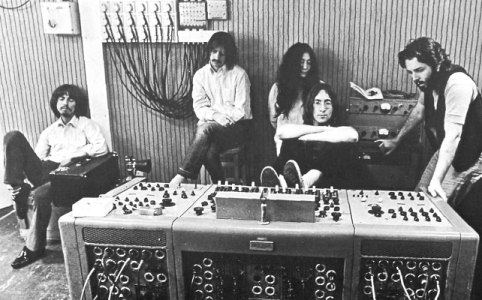
John, stop the car, Ringo's got out again.

I realize I'm talking in degrees here, but if anything I'm searching for larger context in the overall conversation to answer my previous question. I left the conversation with Roger yesterday and took the dog for a walk (a sure way to clear my head if ever there was one), and came back and Tweeted that the thing that bothered me about Sample's article was that he didn't offer solutions. Actually, I was wrong. He did offer solutions: the importance of including the Pre-Platform studies in video game studies.

Creeping a bit (because that's how I roll) I saw an earlier conversation Sample had with one of his followers about the book question, and both of them mentioned books that are (I'm paraphrasing) ethically created - not printed in countries where they would deforest land for pulp, or mistreat workers in the paper mills.

That's where I left things last night.

This morning I realized perhaps the best comparison to what Sample was proposing wasn't from another art form at all, but instead from the food industry.

Pre-Platform Food? How about ethically sourced, local, and/or organic food? Chances are, thanks in no small part to the rise of the online foodie movement and the ease of access to films like Super Size Me or Food, Inc., you're at least aware of these options as being healthier for you as well as better for local producers and the environment. You're probably not calculating the carbon footprint of every meal you consume (although if you are, bully for you!), but there is a much higher level of awareness around these things at the consumer level.

Waggle Wiimote to pick locally-sourced food.

But this isn't just a movement at the consumer level: chefs prefer these sorts of ingredients when they're creating food. Case in point: local Seattle chef Becky Selengut's book Good Fish, which is as much about seafood preparation as it is about the ethics around the seafood supply chain: an issue around which there are as many moral problems for Western societies as the consumer electronics supply chain.

And that is the crux of my reply to Mark Sample: Pre-Platform Studies should be part of conversations around not just video games, but any artform that ties so closely into supply chains. Where DOES that paper come from that your novel is printed on? Aren't there just as many third-world miners, raw materials, factories, and exploited workers in the sound system I'm listening to, the Kindle I'm reading on, the television I'm watching, the cameras and computers that went into producing Avatar as there are in games?

To rephrase as a statement rather than a question: this isn't just about video games, and it's frankly a larger conversation that just video game studies. It is (marketing hat on) a consumer awareness and perception issue that goes way beyond video games. As a technologically advanced society we become increasingly reliant on things from which we are further and further divorced, whether it's our phones, TVs, Xboxes, cars, food, or even the houses we live in or the places we work and play. I'll admit, as savvy as I'd like to think I am about such things, I have no clue about how most of the stuff I use is made. Even the table I'm typing this on was made in India, and I can only imagine the state of the furniture factory that created it or the processes that went into harvesting the trees - and my imagination is not good.

I don't want to think about the exploitation it took to create these pixels.
This is what I was looking for in Sample's blog post, because it is a broad and extremely important consumer issue in an increasingly global society. It's not like we can all whip out our local Shaker-made iPhones and connect to the Organic Locally Sourced Cellphone Network. At least, not yet. It is good to have goals after all.

So the conversation Sample's proposing seems to me less of one central to video game studies, and more of one central to overall consumer awareness and the impact of a technologically advanced society such as ours. There are indeed a lot of conversations to be had about exploitation at all levels of the games industry, from the aforementioned supply lines to the more First World Problems around game companies overworking staff members around launch and then firing them shortly thereafter.

Video game screenshot of the awful working conditions at a fictional video game company. Meta as fuck.

But whether this is integral to the study of the game itself is another story. I'm coming down on the side of "not really," for the same reason that the context of the paper the first edition Moby Dick was printed on isn't integral to the study of Moby Dick, or the way that the oil that powers a sports car isn't important to the performance of the car itself on a test course. Which takes away nothing from the broader point that this is a very important issue. It just strikes me as a consumer ignorance and awareness issue rather than a critical one.


Monday, July 28, 2008

ARGs and the Changing Face of Fiction Online

A fascinating pair of posts ran recently on two separate websites about the ARG (alternate reality game) marketing techniques around The Dark Knight (which, as it just came out in the UK, I have not yet seen.) The first post on Movie Marketing Madness describes in excruciating detail every piece of 'alternate reality' created by the Dark Knight’s agency. It is an amazing and exhaustive list: I don't think it's hyperbolic to state that this is probably the most complex and involved ARG to date.

The second was a post labelled [RANT] on sci-fi blog io9 called The Argument Against ARGs. I wouldn't even call it a rant: the author does a good job summarizing the basic history of ARGs (although the excellent ARG for Nine Inch Nails' Year Zero album isn't included, and it beats the socks off iheatbees) but outlines a very real problem with ARGs. Money quote(s):

    I see nothing wrong with making advertising more fun, and there's no doubt that a lot of people enjoy playing ARGs. What I do have a problem with is the way ARGs seem to have no lives of their own – they feel like they exist solely to advertise another story. At least videogame tie-ins to movies are marketed as their own, standalone items.

    With a few notable exceptions, ARGs are basically treated like walk-in commercials a lot of the time. But commercials can't really masquerade as games: It's foolish for entertainment companies to assume that they can get audiences to forget that they're being virally marketed to. And yet I think ARGs are temping as advertising campaigns because their structures inspire so many of the fan behaviors that media companies translate into instant dollar signs. But getting people to run around and do things is not the same as inviting an audience to enjoy a compelling narrative with a bunch of pals. So with an ARG I get a crappy cell phone instead of a cool fan community? ...

    [w]hat I'd like to see are ARGs for their own sakes — ARGs that involve fans not because they give away posters or free showings, but because they are genuinely compelling tales that you actually want to interact with. A best-case scenario for ARGs might be that they ditch parent stories altogether, becoming their own entities.
Emphasis mine.

This is exactly my problem with ARGs and why they may very well be the next great form of entertainment.

Allow me a digression for a moment. One of the best books I've read in the last five years is Mark Z. Danielewski's stunning House of Leaves, which is many things to many people: a very unique horror novel, a satire of literary criticism, and potentially 'just plain fucking weird.' The book itself is a labyrinth of footnotes that lead to more footnotes, different colors of text that may or may not have meaning, size and positioning of text, stories within stories and stories within footnotes. There's even a 'soundtrack' of sorts – the author's sister is indie music artist Poe whose album 'Haunted' is essentially a soundtrack for the book. Many of the track names mirror chapter titles in House and the title track specifically mentions 'this house of leaves' in the lyrics, and has other references to the book as well.

As I read House I began to wonder: how would this book work as a movie? Is there any way to translate these disparate elements, many of which are intended to be clues to discover the underlying plot, to an entertainment medium? My answer at the time (keep in mind, this was 2002 or so) was to release it as a DVD and include the footnotes / secondary stories as extra features accessible during the movie, or as a commentary track.

Which really isn't a bad idea, but doesn't really account for the full breadth of the book's rich puzzle and mystery. House of Leaves is essentially a mini-ARG in that it combines several elements to form a mystery with various clues. It follows a tradition of literary 'puzzles,' most notably modernist works like Ulysses and T.S. Eliot's poems, and takes it a step further by introducing a different world of magical realism and strange happenings, where houses can be bigger on the inside than the outside. A mini-ARG.

I'd be remiss if I didn't mention Cathy’s Book, an actual ARG and bestselling book by Jordan Weisman and others (full disclosure: I worked for Jordan's old game company, WizKids, and many of my friends for his new company, Smith and Tinker.) In fact Cathy's Book is exactly what the io9 writer was talking about: an ARG for its own sake, not selling a product. But even Cathy's Book just scratches the surface of what's possible with the myriad variety of content deployment mechanisms the Internet provides.

My job forces me to think about how to bring those mechanisms together to 'tell a client's story.' Storytelling is what PR really is, when you get down to it. Except online those stories are less about shouting at people or performing a play for them and more about involving them in writing the story yourself. Kind of like (nerd alert) running a roleplaying game. Although you have a goal in mind, the way in which you get there is based as much on player input (community input) as it is your own 'story.' The nonflexible gamemaster sucks, as does the nonflexible PR storyteller.

But it also affords massive opportunities to do exactly what Jordan did and what the io9 writer proposes to do. If 'all media is multimedia,' surely we gamemasters and storytellers should discover new ways to tell our tales online? And surely, purely from a storytelling standpoint, we can do that with ARGs for their own sake?

I pose this not as a marketer but as a writer: if literature is already becoming more gamelike and games are becoming more literary, doesn't it make sense for us to be thinking of this space not as a way to sell tickets to movies or things only tangentially-related to the ARGs that marketers create but as a new and unlimited canvas for us to start telling engaging tales to audiences who clearly want this sort of thing?

The ARG's future and its literary possibilites and implications are something to watch indeed.

Photo "Art Is Resistance - London" (from the Year Zero ARG) from Jennaphoenix' Flickr stream.

Monday, April 28, 2008

On Marketing

From the Hitchhiker's Guide to the Galaxy:

    The Hitch Hiker's Guide to the Galaxy defines the marketing division of the Sirius Cybernetics Corporation as "a bunch of mindless jerks who'll be the first against the wall when the revolution comes," with a footnote to the effect that the editors would welcome applications from anyone interested in taking over the post of robotics correspondent.

    Curiously enough, an edition of the Encyclopaedia Galactica that had the good fortune to fall through a time warp from a thousand years in the future defined the marketing division of the Sirius Cybernetics Corporation as "a bunch of mindless jerks who were the first against the wall when the revolution came."

Thursday, September 06, 2007

The Value Of Engagement

I had an interesting discussion yesterday with a coworker who asked a common question when dealing with the folks here in EIS: "what value are you adding?" If I had a dollar for every time I've heard that, I'd have a lot of dollars.

But underlying that question is a sentiment that lies at the heart of both PR today and specifically what I do, and where I think we need to go from here. We (meaning, the New Marketing folk) have trained the traditional marketers to see the Internet as something of which they need to be aware, and in which they need to participate. That's good, but it's only the first step on a long road and unfortunately it seems that more and more, traditional PR practitioners see it as the destination rather than that first step.

The traditional PR "comfort zone" modus operandi is this:

    1. Examine product or service and create a catchy strategy for getting people exited about it.
    2. Call or write or email (aka, "pitch") magazine or newspaper with catchy product idea. This can be a clever press release, a press kit that may or may not relate to the product itself, or a "product sample" that the reporter can play with and then choose to keep. Or a combination thereof.
    3. Set up an interview with the reporter, where the PR person prepares the company's spokesperson with a series of questions the reporter could ask, the important things the spokesperson needs to talk about, and a little bio about the reporter that details what the reporter likes and dislikes.
    4. After the interview, the reporter writes the story, and PR provides them with images, answers follow-up questions, and so forth.
I realize I squeezed a lot of traditional PR know-how into four sentences and obviously glossed over some things, but if you reduce the total to four main components, it would look something like that.

Traditional PR people like that because it's safe and controlled (to a certain degree), but more importantly they can measure the value in such a thing. Another way of saying "what's the value" is "what's the ROI" (return on investment.) That's a marketing and advertising term that bled its way into PR after people realized the importance of our industry, and advertising and marketing people started migrating over to PR jobs. ROI can best be expressed by an equation:
    ROI = ((X*Y)^Z)/A, where X is the number of stories about a product, Y is the tone of those stories measured on a standard scale, Z is the circulation numbers of the publications, and A is the "investment" in time and resources (AKA $$$) spend on securing the coverage.
There's a reason people like this method: it's quantifiable, it's trackable, and in the end you can present hard numbers to a superior (or an auditor) and say "look at what we did with our budget!"

Author's Note: I was not a PR or business major, so I'm sure someone who studied this stuff will correct me on the formula and definitions above - but the spirit of it is correct.

So when faced with the Internet and "the blogosphere," it's not surprising to see traditional PR people looking for something sane and familiar. They see blogs and think: "blog = news outlet, blogger = reporter" and want to engage and measure appropriately. Several times I have run into the question, "why are we planning on outreaching to this blog when this other, completely unrelated blog has a much higher readership?"

Here's the thing: this really is the first step in a much larger process, and "success" should not be measured by the number of stories appearing on blogs and the total readership of those blogs. Why? Because that isn't where the interesting things are happening on the Internet. Sure, you should try to get bloggers to write about your stuff, but what's really interesting is in the comments sections in the blogs, and on the forums and newsgroups and email lists where real people are sharing their opinions of the product. The real measure of success isn't stories, it's sales, and you can have all the great stories in the world - but it ain't the reporters who are going to line up to buy your product. It's the people doing the commenting, the people engaged in the conversations.

Here's another way to look at it: when I was a tyke, I read two sections of the newspaper every morning, the comics and the Opinions page. The comics because they're funny, and they were still publishing Calvin and Hobbes back then. And the Opinions page because it was the most interesting section of the newspaper. Who wants to read the news, when you can read what people think about the news? What gives you more insight into your community (I use that term here to indicate "the town in which you live") - news about your town, or what the people in town think about the news about your town?

Of course, a lot of bloggers put their own opinions into stories, which is good - and it's one of the things that differentiates them from traditional news sources. Just like in literary studies, there's kind of an unwritten rule in blogging: if you're quoting a source (say, an article you picked up somewhere else or a song you're posting), then you should write at least as many lines discussing the quote, if not double the number of lines. It's a rule I haven't always followed, but it's one I try to follow as best I can, and many other bloggers do too.

But like the Opinion pages of yore, the most interesting perspective of the online community is in their discussion of goings-on. At WizKids, I used the community's reactions to identify short-term problems but also long-term trends, which we could then use to adjust our overall strategy. It's definitely an investment in time, but it's one that companies would do well to invest in more often.

UPDATE: Next post in series: the current debate about how to engage bloggers, and why it doesn't go far enough.

Friday, February 09, 2007

What is the Threshold for Being Wrong?

A couple of years ago, I saw a documentary on Karl Rove that explained how he began to hone his tactics in political discourse (a YouTube search has not yielded the clip). In this documentary, the biographers - many of them his friends - explained that Rove always thought he was right. That he was thoroughly convinced of his own position, and that he wouldn't take that position if he wasn't convinced.

Fair enough. I'd have to say that I feel the same way. If I'm not necessarily convinced of something, I'm not going to argue for or against it.

The show went on to explain that in his high school (or college, I can't recall) debate class, Rove would often use intimidation tactics on his opponents. If they showed up with a few index cards worth of notes, he would show up with a box of index cards. They would bring two boxes, he would bring four. Eventually he wheeled a dolly full of boxes of "notes" into a debate before someone put a stop to it - but Rove knew the value of psychological warfare, and it is something he has continued to refine since. As a marketing person myself, I have to admire him as a kind of mad genius. As a person who'd like to think that discourse doesn't have to sink to suck levels, he makes me ill.

Because that's the rub, isn't it? If you're really so convinced, why bring the boxes of cards? One could argue it's a tool in the overall debate, but wouldn't a true master of discourse be able to convince his opponents through - I don't know, logic and reason? Perhaps it was all that Greek philosophy I studied and the Platonic dialogues I read, but when I listen to an argument for or against something, I'm sure as fuck going to weed out the psychological warfare elements (doubly so since as a marketing schlub I recognize them) and cut to the actual reasoning behind the position. And if you can't explain that, what good are you?

Which brings me to the point of this post. What exactly is the threshold for being wrong? At what point can you throw away the psychological warfare and your smug self-satisfaction that you've used to belittle and denigrate your opponents, and admit "hey, maybe this isn't the way to go after all." After your "slam-dunk" WMDs aren't there? After you realize that labelling people who aren't on board with you destroying civil liberties as "traitors" isn't working? How about after the levees break, and the help that you promise doesn't come?

Most recently, it's been two attacks on the opposition that have raised my eyebrows. As the Democrats have already done more in the first month they've been in Congress than the Republicans did in the last six years of controlling the legislative and judicial branches of government by raising minimum wage, how do Republicans respond? With rational discourse? No. They accuse (falsely) Barack Obama of attending a radical Islamic school, and accuse Nancy Pelosi (also falsely) of trying to traipse around the country in a plane that it turns out was requested by Homeland Security?

What exactly is the threshold for being wrong? When does the psychological warfare end? How many "Barack HUSSIEN Obama LOL" jokes are we going to have to tolerate before enough is enough? When will people demand that the boxes of index cards be put away, and we finally return to civil discourse in this country?

I think a lot of people are getting tired of those boxes, and more and more people are seeing them for what they are. And that's really the sad part about warfare, psychological or otherwise: you need to keep providing bigger and bigger boxes. And when you can't anymore, it's time to sit down and settle things like civilized human beings - by talking it over.

Wednesday, February 07, 2007

Web 2.0 in Less Than Five Minutes

Want to know about what I do? That I'm not just some marketing sleaze trying to smarm a few more bucks out of unlucky suckers?

This video can explain more than I ever could. Watch. Observe. Enjoy.


Hat tip: Seth.

Tuesday, December 05, 2006

Games: My Answers, Part Two

Here's part two of my games post, about how I discovered the games I love.

Video Games
Civilization: It's not hyperbole to say that the Civ series is my favorite video game(s) of all time. Period. I was first introduced to Civ when a friend handed me a copy (yeah, an illegal copy) and said "here, try this game." I installed it, fooled around with it, and when my buddy Mike came over for a sleepover we decided to give it a go. We stayed up the entire night playing Civilization, only to end up losing at the end game as Germany's tanks rolled over our knights. Civilization is different because no one was actually there to show me how the game worked; like a lot of video games, while it was recommended to me by a friend, I learned to play it on my own, often through trial and error. An interesting differentiation between video games and traditional games, I think, and a pattern you'll see repeated.

Also, I purchased a legit copy of Civ not long after the sleepover.

Grand Theft Auto: I include the GTA series because, unlike other games, I actually didn't like this one so much when it came out. My first roommate in college played the original GTA and I thought it was shit; I ended up with a copy of GTA2, which had its moments, but I thought GTA3 was far too violent and realistic for my tastes (it lost a lot of the cartoony flavor of the first two games.) It wasn't until Vice City that I found a GTA game I really loved, and San Andreas almost went over the edge. Actually, some parts, like the DDR-like dancing sequences and the "gravel pit" missions, did go over the edge. But I've spent a good deal enjoyable of time with the GTA games (and the slick, and in many ways superior, Bully), but it was a series I really did discover on my own.

Wasteland / Fallout: Those really are one game, right? Of all the games I've replayed that haven't been strategy games, I've had the best time with Wasteland and its spiritual successor. I also discovered Wasteland through a friend, although I discovered the game's depth myself (and Fallout as well.) What I mean by that is that I played the game with a buddy, but never really got into the game. When I got my own copy, I bothered to read the story and begin to understand the game's underlying RPG structure, so it was a far different - and more rewarding - experience.

RPGs
RPGs are a little different. Some of my fellow Alliterates might string me up for this, but I think that many RPG systems are, at their base level, the same game. That is, the game where you show up, imagine you're a character taking part in a story (or creating the story in the case of the GM), and the system itself is simply an abstraction that allows the GM to govern the universe by a set of rules that includes randomness and possibilities and impossibilities. So differentiating between "the d20 system" and "the Rolemaster system" is fairly pointless, at least when it comes to the kind of analysis I'm doing here.

But that being said, I was introduced to D&D - no joke - through the "red box," advertised in a comic book and purchased by me. I ran through Zanzer Tem's tower with an Elf. I can't remember the Elf's name, but I had a good time. And I was hooked. And now look at me.

The Lone Wolf books, on the other hand - my buddy Nick Hannum put me on to those. We used to trade them back and forth. Did you know they're all available online? They are. You should play them.

Thursday, November 30, 2006

Games: My Answers

So how did I learn to play games?

I was thinking about this on my long drive home (OK, so this now counts as my Obligatory Seattle Blogger Snow Post as well, thank God.) It might be better for me if I were to break down a few games I've spent some time playing and act as a relatively representative sample - not necessarily my favorite games, mind you - into three categories. Let's call them Board Games (in which I will put tabletop miniatures games, like HeroClix), Card Games, and Video Games.

Since I consider many RPGs to be the same, just with different systems, I'll put those at the end in a kind of catch-all category.

Board Games
Monopoly: Aside from Chutes and Ladders and Candyland, Monopoly is one of the first board games I have a memory of playing. I'm reasonably certain I was about six or so when my dad taught me how to play. I was lucky in that I came from a family that valued "game nights," so we played a lot of Clue, Euchre, Pinocle, and other games. For a while, we did it once a week. Kind of like I do now with my D&D game, come to think of it.

Chess: I think my grandfather might have taught me the rules to chess. At the very least, he had a crazy chess computer circa 1980 that always played the same opening every time. I learned its opening, and finally started to mirror everything it did. I think I played that stupid computer to a draw more times than I can count, and neither of us never learned from it. I'm guessing I was about 7 or 8.

HeroClix: OK, here's a biggie. I learned HeroClix by myself, but I did so at a friend's recommendation. People who know me, know that I tried Mage Knight before I tried HeroClix and I hated it. Absolutely, no-holds-barred hated it. I thought the IP was just generic fantasy with nothing unique to recommend it, I thought the gameplay was far too imbalanced and rewarded first strike (actually, first dice roll), and it did nothing for my imagation. I discovered HeroClix on the day Infinity Challenge (the first release) hit the stores; my buddy and I were there to get comics, and he showed me the game because he knew I liked comic book statues. And the sculpts were what drew me to the game first, before the game itself. I learned the game by trudging through the manual and forcing my wife to play playing with my wife. But it was my comic shop guy's recommendation that brought me into the fold in the first place.

Fury of Dracula: I like this game, but not many of my friends do. I was introduced to this game at GenCon 2005 by Angus, who told me he'd played the original version and that I should check out a demo in the Fantasy Flight booth. So I did, and while the game is complicated (not as complicated as Arkham Horror, which I will not include in this list because I've never actually managed to play it), I had a good time and grabbed a copy when it came out later that year. I then tried to teach my wife, roommate, and friends, who didn't like it; then I tried to teach the WizKids crew, who also really didn't like it all that much. Fury of Dracula has its flaws, but what's interesting is that both my personal buddies and the WizKids crew wanted to quit playing after trying it for a certain amount of time. It just wasn't fun for them, and I can't imagine what they would have done if they'd tried to learn it by reading the instructions having purchased the game blind.

Go: First, my confession - I wanted to play Go after I watched the movie Pi because it was "cool." At least in the movie. So I bought a cheap Go set and a book to teach myself Go. I didn't really understand it. Then I journeyed onto Yahoo Games and played Go online. I didn't really understand it then, either. Then I tried to have Crabby teach me how to play Go. And to this day, I still don't understand the rules. Supposedly, the rules are simple, but so far no one has adequately explained the game's mechanics to me in such a way that I've seen the underlying strategic structure (or, for that matter, what the hell I'm supposed to be doing!) I'd still like to play Go someday.

Card Games
Poker: Texas Hold 'Em. Here's another game I didn't understand, even after watching it on television and reading a book about it. It took someone explaining to me how it worked before I "got it." Since that time, I've read all kinds of books, played all kinds of poker both in "real life" and online, listened to poker podcasts, read poker magazines, and so forth, but the game mechanics and my opinions of the game were formed when someone took the time to explain the game to me.

Pinocle: As I mentioned before, Pinocle was a game that we played on family game nights. My family, both sides, and my in-laws all play Pinocle, so it's a good game to know in my situation. I learned Pinocle as kind of an extension to Euchre (the first trick-taking game I learned). It's not really one of my favorite games, because I think it relies a little too much on luck, but it's a fun diversion.

Magic: The route by which I learned Magic is a strange one indeed. The owner of the game store in Bloomington came to give a talk about games to my mom's elementary school class. While there, he talked about this new gaming sensation called Magic. My mom was intrigued, so she bought me a deck (of unlimted) and a booster (of Arabian Nights.) I tried it out and was hooked. I showed it to my friends, who soon bought decks, even the chubby Mormon girl (yes, Mormons play Magic.) We organized a little Magic league at school. We played in Boy Scouts. And here's the funny part: none of us really knew the right rules. We finally read the rulebook enough to figure it out, but there must have been a half-dozen variants flying around at one point. We didn't realize you could play without using all of your cards - I won a tournament because I figured out that there was no rule that didn't let me play with only green cards, so I played with only my green cards. Oh, and we anted. I lost a Time Walk in an Ante. A buddy lost a Black Lotus. We didn't care, because the "collectable" aspect to the game just wasn't there for us yet.

Munchkin: I was introduced to Munchkin by, well, a munchkin (the gaming type, not the cure little kid type) at a coworker's house. Munchkin is right up there with Chez Geek and pretty much every other Steve Jackson game: if you can keep your head down and not piss anyone off, you can win about two-thirds of the time. These games are really just excuses to be social (which is fine), and are fun because the mechanics are simple to teach and you can still play the game after a drink or three.

OK, that's a really long post. Next time, I'll do video games, RPGs, and the Lone Wolf books. 'Cuz I can.

Wednesday, November 29, 2006

Games: The Question, An Answer (Not Mine)

I asked the other day about how you find what you like, and HeroClix player Grey Zealot posted a very well-thought-out answer to my question on his blog, so it's really only fair that I answer myself. Which of course I don't have time to do between my work and the obligatory Seattle Blogger Post About The Snow I still have to make.

But I'll do it later. Maybe even today, if I make it out of here at a reasonable hour.

Monday, November 27, 2006

How Do You Find What You Like?

Since I read The Long Tail, I've been reflecting slowly on some of the things that Chris Anderson discussed. This last trip home, I introduced my nephew to Settlers of Catan, one of my favorite board games. Liz and I were talking about something unrelated the other night (video games, probably), and somehow gaming habits come up - for example, examining twenty casual games in the course of GenCon rather than three very deep games. And that got me thinking about just how we are introduced to the games we like. How do we learn the games we like?

How many games did you learn by buying something based on the box's marketing copy, reading the rules, and sitting down to tear through a game without knowing anything else about it?

Then, think about how many games you've learned because someone said "hey, let me show you this cool game!"

Of course, that second option is kind of esoteric; it could be as simple as "hey, let me show you this cool game!" or as complex as you researching a game online that you think you might enjoy, or visiting an influencer (a blogger, for example) whose opinion you value. But no matter how you think of the second option, I'd be willing to be that most of the games you know and like - Monopoly, chess, checkers, Medieval 2: Total War, Dice Wars, or even Dungeons & Dragons - you learned because someone suggested them to you, or even showed you how to play. In fact, every example above, including probably a hundred others, I found based on suggestion.

Games, of course, are a little different than movies and music, but not much different. How much of your music do you listen to because someone suggested it, and how much did you simply pick up blind in the store? How many movies have you seen because someone said "hey, you really should see this movie, you'd love it."

The challenge for marketing people like myself is finding out how to tap this phenomenon without destroying it. This kind of word-of-mouth marketing, especially for games, is a self-cleaning organism, and I suspect that tampering with it too much would simply create a barrier through which we can never again pass.

It's something interesting to consider as I move forward in my career.